
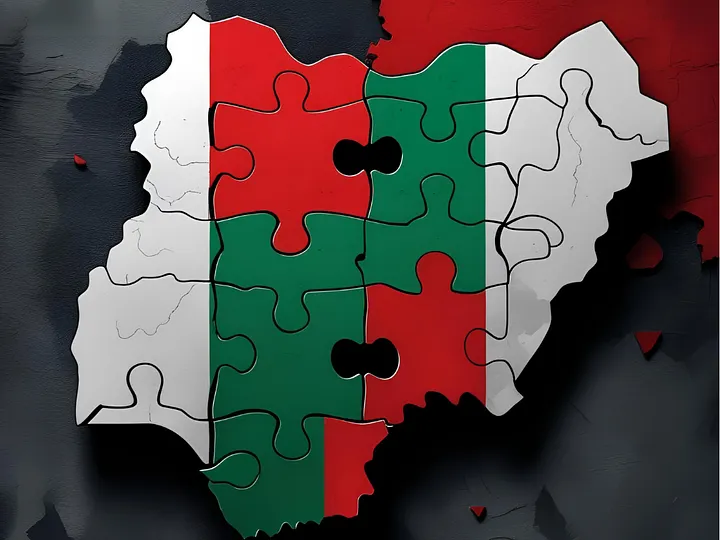
Strengthening Institutions: The Missing Link in Nigeria’s Democracy
More than two decades after Nigeria’s return to democratic rule, the promise of democracy remains unfulfilled for many citizens. While elections are now a recurring feature in our political landscape, governance outcomes continue to fall short of public expectations. Democratic resilience is being tested by persistent poverty, insecurity, institutional decay, and public sector inefficiency.
The real issue is not the absence of elections, but the erosion of the institutions meant to deliver democratic dividends. Strong, transparent, and accountable institutions are the foundation of any functional democracy. In Nigeria, this institutional weakness has become the missing link between electoral democracy and effective governance.
Understanding the Role of Institutions in Democracy
Institutions refer to the formal and informal rules, organizations, and structures that guide how society functions. These include the judiciary, legislature, anti-corruption agencies, civil service, law enforcement bodies, and the electoral commission, as well as social norms, media, and civic platforms that influence accountability and responsiveness.
In a well-functioning democracy, institutions:
- Uphold the rule of law
- Check executive overreach
- Enforce accountability mechanisms
- Provide continuity and stability in public policy
- Create channels for civic participation and redress
Institutions ensure that democracy extends beyond election day and is felt in the quality of life, trust in government, and access to justice for every citizen.
Nigeria’s Institutional Challenges: A Critical Governance Deficit
Nigeria’s institutional landscape is characterized by fragmentation, underperformance, and, in many cases, political capture. The judiciary often faces political interference and delayed adjudication of corruption cases. Regulatory institutions such as the Economic and Financial Crimes Commission (EFCC) are frequently perceived as selective in their operations. The public service is plagued by capacity gaps, politicized appointments, and inconsistent policy execution.


The 2023 Mo Ibrahim Index of African Governance ranked Nigeria 31st out of 54 countries in overall governance, with particularly low scores in “Rule of Law & Justice” and “Accountability & Transparency” (Mo Ibrahim Foundation, 2023). These weaknesses reflect the broader institutional fragility that undermines both trust in the state and development outcomes.
Democracy Is More Than Elections
In recent years, Nigeria has made commendable efforts to improve the integrity of its elections. The introduction of the Bimodal Voter Accreditation System (BVAS) by the Independent National Electoral Commission (INEC) is one such reform. However, focusing on the electoral process alone is insufficient.

Democracy cannot thrive on elections alone. What happens between elections , how institutions function, how laws are enforced, and how public resources are managed, is what determines the legitimacy and effectiveness of a democratic government. As political scientist Francis Fukuyama notes, “Strong political institutions are essential to both stability and accountability in governance” (Fukuyama, Political Order and Political Decay, 2014).
“Strong political institutions are essential to both stability and accountability in governance” — Fukuyama, Political Order and Political Decay, 2014
Learning from Others: Regional Examples of Institutional Strength
Nigeria’s challenges are not unique. Across Africa, some countries have made significant progress in building institutions that support democratic governance:
- Ghana’s Electoral Commission has consistently earned public trust for its operational independence and transparent conduct of elections. Its commissioners enjoy security of tenure and institutional continuity, enabling long-term planning and credibility.
- South Africa’s Constitutional Court has repeatedly demonstrated judicial independence by issuing landmark rulings, including holding presidents accountable for constitutional breaches.
- Rwanda, despite its hybrid governance model, has reformed its civil service and public financial management systems, resulting in improved service delivery and bureaucratic professionalism
These countries illustrate that institutional transformation is possible when supported by legal safeguards, leadership commitment, and sustained civic engagement.
Rebuilding Institutions in Nigeria: What Needs to Happen
The pathway to stronger institutions in Nigeria is neither quick nor easy. It requires deliberate, strategic, and sustained reforms focused on both technical capacity and political accountability.

Key priorities include:
- Constitutional and Legal Reforms
Legal frameworks should safeguard the independence and financial autonomy of critical institutions such as INEC, the judiciary, and anti-corruption agencies. - Professionalization of the Civil Service
A merit-based, performance-oriented public service is crucial. This includes reforms to recruitment, training, remuneration, and career progression structures. - Public Sector Digitalization
Leveraging technology to automate processes, publish procurement data, and track public expenditure can reduce corruption and increase transparency. - Strengthening Oversight and Checks
The legislature and audit institutions must be empowered to perform their oversight roles without fear or favour. This also includes reforming the code of conduct and asset declaration processes. - Civic Engagement and Independent Media
Civil society and media platforms play a crucial role in holding public officials accountable and raising citizen awareness on institutional performance. - Leadership by Example
Political will remains the most critical enabler of institutional reform. Leaders must set the tone from the top by respecting institutional boundaries and upholding the rule of law.
The Role of Partners and Reform Advocates
Strengthening institutions is not the sole responsibility of government. Development partners, think tanks, academic institutions, and civil society organizations must collaborate to support reform efforts through technical assistance, policy innovation, and evidence-based advocacy.


Local actors such as the Centre for Public Sector Governance (CPSG) and similar organizations have a vital role to play in building platforms for dialogue, capacity building, and tracking reform outcomes. True reform must be both top-down and bottom-up.
Conclusion: A Call to Action

Nigeria’s democratic journey is still evolving. However, its progress will remain constrained until it confronts the institutional weaknesses that have hollowed out governance.
For democracy to deliver real value to citizens security, jobs, justice, and public services, it must rest on a solid institutional foundation. Strengthening institutions is not just a matter of good governance; it is a matter of national survival. Now is the time to shift our democratic focus from simply winning elections to building the institutions that ensure everyone wins.
References
- Mo Ibrahim Foundation (2023). Ibrahim Index of African Governance (IIAG). Available at: https://iiag.online/
- Fukuyama, F. (2014). Political Order and Political Decay. Farrar, Straus and Giroux.
- International IDEA (2023). Global State of Democracy Report. Available at: https://www.idea.int
- OECD (2018). Integrity for Good Governance in Africa.
- DFID/Nigeria PERL Programme (2020). Strengthening Core Governance Institutions in Nigeria.
This article was written by the Centre for Public Sector Governance (CPSG), we promote best practices in public sector administration, governance, and leadership. We are focused on transparency, accountability, and inclusiveness to drive meaningful reforms.